Yoga Sadhana

Mantra as a Sculptor of the Mind

Let’s explore how the Gayatrī Mantra embodies the principle that:

“The mind (Manas) takes the form (Vṛtti) of what it dwells upon. Mantra purifies Vṛttis, creating Jñāna Vṛttis (knowledge-modifications) that reflect higher realities.”


🔱 GĀYATRĪ MANTRA (Sanskrit with IAST)

ॐ भूर्भुवः स्वः
तत्सवितुर्वरेण्यं
भर्गो देवस्य धीमहि
धियो यो नः प्रचोदयात्॥
Om bhūr bhuvaḥ svaḥ
tat savitur vareṇyaṁ
bhargo devasya dhīmahi
dhiyo yo naḥ pracodayāt.


🧠 Core Idea: Mind (Manas) Takes the Shape (Vṛtti) of Its Object

✨ 1. Mind is Formless but Reflective

According to Yoga and Tantra:

  • The Manas (mind) is like a mirror or soft clay.
  • It assumes the form (Vṛtti) of whatever it repeatedly focuses on.
  • This Vṛtti is the content or shape of the mind.

🕉️ Gāyatrī Mantra in Action

🔹 Śabda (Sound):

You chant the mantra with devotion:

“tat savitur vareṇyaṁ bhargo devasya dhīmahi…”

This produces a vibration in the mind and subtle body. The sound begins to reshape the mind.


🔹 Vṛtti Transformation:

The phrase “dhīmahi” means “we meditate upon.”
You’re meditating on:

  • tat saviturthat divine sun (Savitṛ)
  • vareṇyaṁ bhargaḥthe most excellent, pure spiritual effulgence
  • devasyaof the Divine Being
  • yo naḥ pracodayātmay it inspire our intellects (dhīḥ)

Your Vṛtti, or the modification of the mind, is now shaped by the form of divine light, knowledge, and awakening. This is no longer an ordinary thought—it is a sacred Vṛtti.


🔹 Creation of Jñāna Vṛtti (Knowledge-Wave):

Instead of being filled with worldly vṛttis like fear, desire, or anxiety, the mind now holds a pure Vṛtti of illumined intelligence (dhīḥ) and spiritual brilliance (bhargaḥ).

This becomes a Jñāna Vṛtti:

  • It reflects the true nature of Self and Reality.
  • It’s sattvic, luminous, and spiritually elevating.

🔄 Mantra Purifies Vṛttis

  • The mind always has a Vṛtti—it cannot remain contentless unless in Samādhi.
  • If left untrained, Vṛttis are filled with egoic content (Ahaṁkāric Vṛttis), causing bondage.
  • But when you repeat a mantra like Gāyatrī, the old Vṛttis are replaced and purified.
  • Over time, only divine forms remain in the mental field.

🌺 The Outcome in Sādhanā

Through consistent japa (mantra repetition) and dhyāna (meditation):

  • The mantra carves the divine archetype into the subtle mind.
  • The mind takes on the shape of Divine Savitṛ—the archetype of light, inspiration, and wisdom.
  • This leads to inner awakening, clarity, and ultimately realization.

This is not imagination—it is a real transformation of the mental substance, as per both Tantra and Vedānta.


📿 Summary Table: Gāyatrī and Mind Transformation

AspectExplanation
Manas (Mind)Neutral, formless field ready to receive impressions
VṛttiBecomes shaped by divine light of Savitṛ
Jñāna VṛttiPure thought-wave of spiritual wisdom and clarity
Mantra RepetitionReplaces impure Vṛttis with sattvic (pure) ones
Final ResultRealization of Self through Divine Light

🔚 Conclusion: Mantra as a Sculptor of the Mind

“The mantra is the sculptor, and the mind is the clay. The form carved is divine.”

In the case of Gāyatrī, the clay of the mind is shaped into the radiance of spiritual intelligence (bhargaḥ), leading to pure insight (dhīḥ). This is the very heart of mantra sādhana.

Mantra as a Sculptor of the Mind Read More »

🪔 The Basic Idea: Unity of Śabda, Artha, and Pratyaya in Mantra Sādhanā

The core principle in Mantra Śāstra is that Śabda (sound), Artha (meaning/object), and Pratyaya (mental apprehension/idea) are not separate entities but deeply interconnected and ultimately unified in Mantra Sādhanā (spiritual practice with mantras). This is especially powerful when understood through the Gāyatrī Mantra, one of the most revered mantras in the Vedic tradition.


🔹 Śabda (शब्द) – Sacred Sound / Word

This is the vibrational expression—the spoken or mental sound of the mantra. In mantra sādhanā, the repetition of the mantra (japa) uses the power of vibration to influence both the subtle and gross bodies.

In the Gāyatrī Mantra, the Śabda is:
ॐ भूर्भुवः स्वः तत्सवितुर्वरेण्यं भर्गो देवस्य धीमहि धियो यो नः प्रचोदयात्।

oṃ bhūrbhuvaḥ svaḥ tatsaviturvareṇyaṃ bhargo devasya dhīmahi dhiyo yo naḥ pracodayāt.


🔹 Artha (अर्थ) – Meaning / Object / Divine Reality

This is the meaning or object evoked by the sound. Every mantra has an inner essence, a deity, a cosmic function, or a spiritual goal it points to. Artha is not just literal meaning, but also the deity-form (devatā) or spiritual energy associated with the mantra.

In Gāyatrī:

  • The Artha is Sāvitrī, the Divine Sun as a symbol of supreme spiritual light and cosmic intelligence.
  • It also implies awakening higher intellect, illumination, and realization of truth.

🔹 Pratyaya (प्रत्यय) – Mental Image / Apprehension

This is the inner cognition or mental concept formed by hearing or repeating the Śabda. When mantra japa is done consciously, the mind creates a visualization or feeling that reflects the Artha.

In Gāyatrī, Pratyaya may include:

  • Visualizing the rising sun radiating divine light.
  • Contemplating pure intelligence flooding one’s mind (dhīyo yo naḥ pracodayāt – “may it inspire our intellects”).

🧘🏽‍♀️ How They Are Unified in Mantra Sādhanā

Śabda (Sound)→ produces →Pratyaya (Mental Apprehension)→ connects to →Artha (Meaning / Divine Object)
Mantra is recitedA mental image or concept arisesThe divine presence or goal is felt
Sound of “Savitur”Evokes image of the Divine SunRealization of Sāvitrī, the Illuminator
“Dhīyo yo naḥ pracodayāt”Inspires inner prayer for higher mindAwakens connection to divine intellect

In advanced sādhanā, this process becomes non-linear and unified:

The sound is the form is the deity.

This is the core principle of Tantra and Veda alike—the sound-vibration is not a symbol of reality, it is that reality in vibrational form.


🌞 Gāyatrī Mantra: Practical Illustration of Unity

Step-by-Step:

  1. Recite Śabda: You intone the mantra correctly with rhythm, pitch, and devotion.
  2. Evoke Pratyaya: Your mind focuses on the radiant divine light of Savitṛ, the sun of consciousness.
  3. Connect to Artha: You invoke not just outer sunlight, but the inner Light—the essence of Pure Intelligence (Viveka, Prajñā, Cit).
  4. Transformation Happens: Through continuous repetition (japa), the sound, image, and divine meaning become one reality in your awareness.

This is how the mantra moves from being a thought or ritual to becoming a direct spiritual force.


🌺 Why This Understanding is Important

✅ 1. Deepens Your Practice

You don’t just chant a mantra blindly—you embody its essence. That leads to greater mental purity, focus, and emotional elevation.

✅ 2. Leads to Realization

The ultimate aim of mantra sādhanā is to realize the Artha—the divine truth or power behind the mantra. This realization liberates the soul.

✅ 3. Unifies the Inner Faculties

When Śabda (voice), Pratyaya (mind), and Artha (goal) are unified, the whole being is aligned. This is Yoga—spiritual union.


🪄 Tantric View

In Śākta-Tantra, it’s taught:

“Mantra is Devatā. Mantra is Consciousness.”

So:

  • Śabda is Śakti (power)
  • Artha is Brahman (consciousness)
  • Pratyaya is the bridge (awareness)

The practitioner, through mantra, becomes one with the deity, as mind and sound are fused in non-dual consciousness.

🪔 The Basic Idea: Unity of Śabda, Artha, and Pratyaya in Mantra Sādhanā Read More »

How does Anushthana (spiritual practice) and mantra sadhana yield results?

Many people do not have a proper understanding of how worship (upasana), anushthana, and sadhana help fulfill their intentions (sankalpa). They imagine that as soon as they chant a mantra, God will immediately act like their servant and bring everything they desire to their feet.

The deity we worship is a supreme power endowed with immeasurable strength and infinite knowledge far beyond our comprehension. Therefore, it is a foolish notion to think that we can approach such a divine authority the way one might bribe an ordinary official to get one’s work done as desired.

All divine forces bestow their power and knowledge in alignment with the universal law (prapancha niyati). We must receive that energy and, through our own capacity for action (kriya shakti), accomplish our objectives.

When we undertake anushthana with a specific intention, the divine power first grants clarity in our intellect and then grants the strength to our body and mind to carry out the intended task. When both of these have taken place, if the practitioner actively engages in the required effort for the chosen goal, success follows. If, out of laziness, the practitioner fails to make any effort, the power accumulated through the anushthana can go to waste.

Therefore, it is essential that you make a sincere effort to act upon the intention (sankalpa) you have set.

How does Anushthana (spiritual practice) and mantra sadhana yield results? Read More »

🌺 Spiritual Meaning of Offering the Gāyatrī Mantra in Yajña

Let’s analyze the higher spiritual and philosophical meaning behind reciting the Gāyatrī Mantra with “Svāhā” and then declaring “Gāyatriyai idam na mama” (or “Gāyatriyai idam mama”, depending on the tradition):


1. Why do we add “Svāhā”?

  • Svāhā is the sacred word of offering—literally, “Let it be well established” or “I have offered it with devotion.”
  • In the ancient Vedic fire rituals, Svāhā was the sound that consecrated the oblation into the fire—symbolizing total surrender.
  • When you chant the Gāyatrī and conclude with Svāhā, you are burning the mantra in the fire of your consciousness.
  • It means: “This is my offering into the inner fire—may it be received by the higher forces.”

Philosophically, this points to self-offering:

🔥 The fire is not merely external—it is the inner Agni, the transformative energy within you.
🔥 The mantra becomes the bridge between your limited mind and the cosmic Intelligence.


2. “Gāyatriyai idam na mama” — “This belongs to Gayatri, not to me.”

  • These words complete the spirit of renunciation.
  • Na mama means “Not mine.”
  • Whatever you recite, whatever you offer—you relinquish ownership.
  • You declare that: This offering is not for my ego, my pride, or my gain. It is for the Divine Principle embodied by Gayatri.
  • Gayatri herself represents:
    • Universal Intelligence (Varenyam Bhargah)
    • The awakening power of the soul
    • The radiance of Truth that dispels ignorance
  • So when you say na mama, you are spiritually stating: “I dissolve my claim of doership. This action is for the cosmic purpose. May this offering uplift all beings.”

3. The Higher Purpose

At the deepest level, this simple act becomes:
Purification of the ego
Alignment with Dharma
Attunement to the Self-luminous Reality
Sacrifice of the sense of separateness

When the mantra is offered with Svāhā and dedicated na mama, it becomes a Yajña of consciousness:

  • You are offering your breath, voice, thought, and intention.
  • You are reminding yourself: “My life itself is an offering. My actions belong to the Divine.”

🌟 In Essence

When you chant:

ॐ भूर्भुवः स्वः… स्वाहा | गायत्र्यै इदं न मम।

You are not just repeating words.
You are performing the most sacred act:
✅ The sacrifice of ego into the fire of wisdom
✅ The consecration of life into the service of the Supreme
✅ The affirmation that all belongs to That Light


This is the true spirit of Yajña—where you cease to live merely for yourself and offer everything into the vast current of Universal Consciousness.

🌺 Spiritual Meaning of Offering the Gāyatrī Mantra in Yajña Read More »

Purpose of Sādhana

The Beginning of the Search for the True ‘I’ and the Purpose of Sādhana

Our Divine Being (Bhagavān) is such a Reality that, when He remains concealed, even our closest loved ones may turn against us and, figuratively, put fire into our mouths and offer us oblations to death. In the statement: “I do not know anything, nor do I believe in anything,” — the presence of the ‘I’ is essential. It is from here that the true search for the real ‘I’ begins.

In this inquiry into the self, through deep reflection, the seers (ṛṣis) discovered a permanent and supreme ‘I’, whose true nature is beyond the reach of speech and mind. These same ancient sages declared that this Being is of the nature of Sat–Cit–Ānanda (Existence–Consciousness–Bliss).

The Vedas proclaim that He is both formless (nirguṇa) and with form (saguṇa).

  • To the extent that He reveals Himself through His own power (śakti), and
  • to the extent that we purify and refine our senses and, with Her help, grasp His nature —
    He is saguṇa (with attributes).

Beyond that, His unknown, unrevealed aspect is referred to as nirguṇa. The seers who have realized the Truth have described His manifested aspect using names such as Saguṇa, Sat–Cit–Ānanda, Puruṣottama, and so on.

The Śakti, who is the source of infinite variety, limitless beauty, sweetness, and charm, infinite power, knowledge, and bliss, and the reservoir of all auspicious qualitieswe are Her reflection or portion. That infinite Power lies dormant within us in seed form.

To awaken this Power, to fill ourselves with divine awareness (bhagavad-bhāva), to become empowered by Divine Śakti, and to dedicate ourselves to actions pleasing to the Divinethis is the supreme and ultimate purpose of life.

Purpose of Sādhana Read More »

Understanding Buddhi, Ahaṁkāra, and Manas through the Logic of Guṇas

The chart (based on your description and context) illustrates the Samkhya philosophical model of how Prakṛti’s three guṇasSattva, Rajas, and Tamas—combine in various intensities to form the first evolutes of manifest creation when consciousness (Puruṣa) comes into proximity with matter (Prakṛti). Here’s a detailed breakdown of the logic and argument behind the table:


🟡 Core Philosophical Framework:

  • Prakṛti (Nature): The unmanifest, primal matter composed of the three guṇas.
  • Puruṣa (Consciousness): The eternal, passive witness and knower—pure awareness.
  • Guṇas (Constituents):
    • Sattva – light, clarity, knowledge
    • Rajas – activity, motion, passion
    • Tamas – inertia, obscuration, dullness

🧠 Table Logic: The Evolution of Subtle Matter

The table shows how the dominance of different guṇas leads to the formation of different evolutes (first forms) of the mind-stuff (chitta):

EvoluteSattvaRajasTamasDominant Guṇa
Buddhi (Intellect)321Sattva
Ahaṁkāra (Ego)132Rajas
Manas (Mind)213Tamas
  • The score of 3 indicates the dominant guṇa in the respective component.
  • The values show the proportional influence of each guṇa.
  • Each evolute forms a part of chitta, or mind-stuff, in subtle matter (sūkṣma-prakṛti).
  • These are not yet gross elements (like earth, water) but the subtle mental faculties through which Puruṣa interacts with the world.

Philosophical Implication:

  • These three evolutes together form the antahkaraṇa (inner instrument):
    • Buddhi allows discrimination and decision-making.
    • Ahaṁkāra gives the sense of “I” or individuality.
    • Manas organizes sensory inputs and facilitates mental processing.

Once these subtle evolutes are infused with Puruṣa’s light (conscious awareness), they become instruments of knowing, even though they themselves are unconscious by nature (as products of Prakṛti).


🧩 Argument Summary:

  • Prakṛti alone cannot evolve without the presence of Puruṣa.
  • Once Puruṣa is present, Prakṛti’s guṇas shift from equilibrium and evolve into complex layers of reality.
  • The first layer is subtle and mental, not physical.
  • The combination of guṇas determines the nature of the evolution:
    • More Sattva → intellect
    • More Rajas → ego
    • More Tamas → mind

🔎 Deeper Insight:

This model offers a metaphysical psychology: our thoughts, ego, and intellect are not random—they are structured evolutions of matter influenced by specific qualities of nature and illumined by spirit.

Understanding Buddhi, Ahaṁkāra, and Manas through the Logic of Guṇas Read More »

Attributes (guṇa-dharmas) of the Three Guṇas

Here is a comprehensive list of attributes (guṇa-dharmas) of the three guṇasSattva, Rajas, and Tamas, based on Sāṅkhya, Yoga, and Vedānta philosophies, as well as the Bhagavad Gītā:


🟡 SATTVA (सत्त्व) — Purity, Harmony, Light

Core Nature: Clarity, knowledge, peace, and upliftment.

Attributes:

  • Lightness (laghutva)
  • Clarity (prakāśa)
  • Purity (śuddhi)
  • Wisdom (jñāna)
  • Contentment (tuṣṭi)
  • Compassion (dayā)
  • Detachment (vairāgya)
  • Joyfulness (ānanda)
  • Forgiveness (kṣamā)
  • Self-control (saṁyama)
  • Equanimity (samatva)
  • Faith (śraddhā)
  • Truthfulness (satya)
  • Harmony (samañjasa)
  • Modesty (lajjā)
  • Devotion (bhakti)

Effects:

  • Leads to spiritual progress and liberation.
  • Increases discrimination (viveka).
  • Makes the mind tranquil and reflective.

🔴 RAJAS (रजस्) — Activity, Passion, Movement

Core Nature: Energy, desire, restlessness, and attachment.

Attributes:

  • Activity (pravṛtti)
  • Restlessness (aśānti)
  • Passion (kāma)
  • Desire (icchā)
  • Attachment (rāga)
  • Ambition (abhilāṣa)
  • Egoism (ahaṅkāra)
  • Greed (lobha)
  • Anxiety (cintā)
  • Mental agitation (manodhvani)
  • Effort (udyama)
  • Pain from striving (duḥkha)
  • Competition (spardhā)
  • Jealousy (īrṣyā)
  • Impatience (akṣamā)
  • Pride (mada)

Effects:

  • Binds the soul through attachment to actions and results.
  • Fuels worldly involvement and emotional turbulence.

TAMAS (तमस्) — Inertia, Darkness, Obstruction

Core Nature: Heaviness, dullness, ignorance, and obstruction.

Attributes:

  • Ignorance (ajñāna)
  • Heaviness (gurutva)
  • Laziness (ālasya)
  • Inertia (jaḍatā)
  • Confusion (moha)
  • Delusion (bhrānti)
  • Negligence (pramāda)
  • Sleep (nidrā)
  • Sloth (tandrā)
  • Resistance to change (anivartanīya)
  • Obscuration (āvaraṇa)
  • Stubbornness (dr̥ḍhatā in ignorance)
  • Depression (śoka)
  • Dullness (māndya)
  • Fear (bhaya)
  • Dependency (āśrayitṛtva)

Effects:

  • Binds the soul through ignorance and delusion.
  • Causes downward movement and bondage in lower states of existence.

🧭 Summary Comparison

AttributeSattvaRajasTamas
MotionBalanceOveractiveInert
Mental StateClear, joyfulAgitated, passionateDull, sleepy
Binding PowerThrough knowledgeThrough attachmentThrough ignorance
Effect on SoulElevatesEntanglesDeludes

Attributes (guṇa-dharmas) of the Three Guṇas Read More »

Introduction to the Three Guṇas

🕉️

(त्रिगुण – The Three Fundamental Forces of Nature)

In the spiritual and philosophical traditions of Sāṅkhya, Yoga, and the Bhagavad Gītā, the entire cosmos—both material and mental—is said to be governed by three fundamental qualities known as the Guṇas: Sattva, Rajas, and Tamas.

These Guṇas (गुणाः) are the primary attributes or forces of Prakṛti (Nature). They are not material substances but dynamic tendencies or energies that govern all forms of existence, thought, emotion, behavior, and perception in the manifest universe.


🔺 The Concept of Guṇa

  • The word guṇa literally means “strand,” “quality,” or “attribute.”
  • According to Sāṅkhya philosophy, before the universe is manifested, Prakṛti (the primordial nature) is in a state of perfect balance of these three guṇas.
  • When Puruṣa (pure consciousness) comes into proximity with Prakṛti, this equilibrium is disturbed, initiating evolution or creation.
  • The interplay of these guṇas gives rise to the diversity and complexity of the universe, from the most subtle thoughts to the grossest forms of matter.

🌿 The Three Guṇas: Essence and Influence

  1. Sattva (सत्त्व)Harmony, Light, and Purity
    • Represents clarity, wisdom, peace, and balance.
    • Promotes truth, goodness, knowledge, and liberation.
    • Uplifts the consciousness and draws one toward spiritual growth.
  2. Rajas (रजस्)Activity, Passion, and Motion
    • Represents energy, desire, action, and restlessness.
    • Causes attachment, craving, ambition, and emotional fluctuations.
    • Binds the self through action and the fruits of action.
  3. Tamas (तमस्)Inertia, Darkness, and Obstruction
    • Represents ignorance, heaviness, delusion, and resistance.
    • Leads to laziness, confusion, and downward tendencies.
    • Binds the self through ignorance and inaction.

🧠 The Guṇas and Human Experience

Each person’s personality, behavior, thoughts, and spiritual progress are influenced by the proportions of these guṇas within them. They are constantly in flux, influenced by:

  • Food and lifestyle
  • Thoughts and emotions
  • Environment and company
  • Actions and habits

The goal in spiritual traditions like Yoga is to increase Sattva, moderate Rajas, and overcome Tamas, eventually leading to transcendence of all three guṇas (guṇātīta) and realization of the Self.


📖 Scriptural Basis

  • Bhagavad Gītā (Chapters 14 and 17) elaborates the nature, influence, and consequences of the guṇas in human life.
  • Sāṅkhya Kārikā presents the guṇas as the root cause of all material evolution.
  • In Yoga Philosophy, understanding guṇas is essential for mental purification (citta-śuddhi) and progress toward liberation (kaivalya).

🕊️ Final Thought

The three guṇas are not “good” or “bad” in themselves. They are essential cosmic energies, and spiritual growth involves:

  • Recognizing their influence,
  • Cultivating Sattva,
  • And ultimately going beyond the entire play of the guṇas to abide in pure consciousness (Puruṣa) — free, eternal, and blissful.

Introduction to the Three Guṇas Read More »

The True Meaning of Tīrtha: A Profound Exploration

Definition and Etymology of Tīrtha

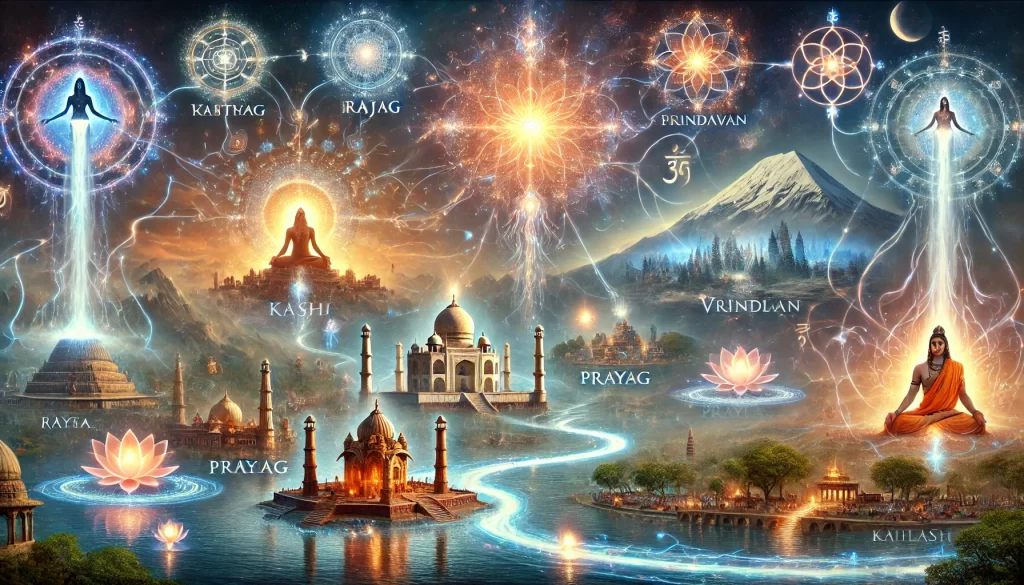
Generally, we understand a tīrtha (pilgrimage site) as a sacred place, such as Vṛndāvana, Prayāga, Puruṣottama Puri, Kāśī, Bhubaneśvara, and many other holy sites that are sanctified and named accordingly. However, we must delve into the deeper meaning of the term tīrtha itself.

The word tīrtha is derived from the Sanskrit root tṝ (√तॄ), which means “to cross over” or “to help transcend.” Thus, anything that assists in overcoming difficulties, obstacles, or barriers—whether physical, spiritual, or metaphysical—is called tīrtha. In the context of rivers, the tīrtha is the designated point where one can safely cross the water. Similarly, in the journey of life and spirituality, a tīrtha facilitates crossing over the ocean of worldly existence (saṃsāra).

In this sense, a guru is also a tīrtha, for the guru aids in crossing the ocean of worldly bondage, leading the disciple toward liberation. Hence, the disciples of a single guru are called sātīrtha—meaning those who share the same spiritual tīrtha. This shows that the word tīrtha extends beyond physical locations and can be used in the context of spiritual guidance.

The Triadic Nature of Reality and the Sacredness of Space

The Mahābhārata, in the Śāntiparva, states that all places on Earth exist within the three guṇas (Sattva, Rajas, Tamas). However, some places are considered sacred because they exhibit a predominance of sattva-guṇa (the mode of purity). The presence of sattva in greater intensity sanctifies a place, making it a tīrtha.

Since all of existence is composed of the three guṇas, their relative proportions vary from place to place. Some places have an abundance of sattva, while others are dominated by rajas (activity, passion) or tamas (inertia, darkness). Even within sattva, there exist varying degrees—some places possess a natural preponderance of sattva, while others gain it through divine presence or the austerities of sages.

Every living being, including humans, animals, and even plants, also carries a mixture of these guṇas. For instance, certain trees like the Aśvattha (sacred fig), Vaṭa (banyan), and Nīma (neem) are considered sāttvika. Similarly, in the Vedic classification of human society (varṇāśrama-dharma), the Brāhmaṇas embody sattva, Kṣatriyas exhibit a mixture of sattva and rajas, Vaiśyas lean towards rajas, and Śūdras are primarily influenced by tamas. The same applies to animals—some, like the lion, are associated with sattva, which is why it is the vehicle of both Śiva (as Paśupati) and the Divine Mother.

The Sacred Influence of Tīrthas

Some places acquire sacredness naturally (svābhāvika), while others become sanctified due to external factors (naimittika). The sites where great sages have performed austerities retain their spiritual energy long after their physical departure. For example, the places where Buddha attained enlightenment, preached, and gave initiations continue to radiate spiritual power. Those who have the sensitivity to perceive such energies can experience this divine presence in places like Bodhgayā.

Similarly, sites where deities have incarnated or performed divine līlās hold imprints of those events in the subtle atmosphere. This is not merely a matter of faith; it aligns with subtle energetic laws. Even modern sciences like psychometry demonstrate that objects retain impressions of past events. A stone can reveal information about its origins and past associations, just as a letter can convey details about the writer’s personality and location. In the same way, spiritual impressions (saṃskāras) remain embedded in sacred places.

The Concept of Spiritual Geography

Just as divine incarnations (avatāras) manifest in the material world for a specific purpose, sacred places (tīrthas) also have their own avatāra—a divine descent into material space. Even the divine objects associated with deities, such as Viṣṇu’s śaṅkha (conch) and cakra (discus), or the sacred flowers and garlands used in worship, have their own cosmic manifestations.

Kāśī (Vārāṇasī) is not just a geographical location but a spiritual reality, described in the scriptures as kāśate tattvamatra—“the place where Truth shines perpetually.” It is believed that those who die in Kāśī are absorbed into the Supreme Light, transcending their bodily identities. This is why Kāśī-mokṣa (liberation through death in Kāśī) is highly revered.

The Science of Pilgrimage

The tradition of pilgrimage (tīrtha-yātrā) emerged as an alternative to the declining practice of Vedic fire rituals (yajñas). In ancient times, elaborate sacrificial rites were common, but as they waned, sages introduced tīrtha-yātrā as a means of spiritual purification. A properly conducted pilgrimage is believed to yield the same merit as performing a yajña.

The deeper science of tīrtha-yātrā involves a systematic process akin to nyāsa (ritual placement of divine energy within the body). Just as in nyāsa, where different parts of the body are consecrated with divine names and energies, so too is the act of visiting various tīrthas a process of internalizing divine vibrations.

Ancient sages prescribed an ideal pilgrimage route beginning from Kāmākhyā, proceeding through Māyāpur, and culminating at Kailāśa. This represents an external journey paralleling the inner spiritual ascent through the body’s energy centers (cakras).

The Inner and Outer Tīrthas

Ultimately, tīrthas exist both externally and within the human body. Kāśī corresponds to the space between the eyebrows (ajñā cakra), Kāmākhyā is located below the navel (svādhiṣṭhāna cakra), and Vṛndāvana aligns with the thousand-petaled lotus (sahasrāra cakra). The entire human body is a sacred landscape filled with pilgrimage sites. A true seeker realizes that while external tīrthas provide purification, the ultimate tīrtha is within oneself.

Thus, a realized being can perform tīrtha-yātrā inwardly, traversing these energy centers through yogic discipline. When the nectar (amṛta) of spiritual awakening flows from the crown (sahasrāra), it purifies the entire being, replicating the effect of external pilgrimage.

Conclusion

The concept of tīrtha is far more profound than a mere holy site. It represents anything that facilitates transcendence—whether it is a river crossing, a sacred place, or a guru. True tīrtha-yātrā is not just about visiting sacred places but about internal transformation. Whether through physical pilgrimage or inner contemplation, the goal remains the same: purification, transcendence, and ultimately, liberation (mokṣa).

This ancient wisdom emphasizes that the Earth itself is a sacred land, imbued with divine energy. The pilgrimage tradition was established to preserve and channel this energy, ensuring that seekers always have access to sources of spiritual upliftment. Understanding this deeper significance, one should approach tīrtha-yātrā not as mere travel but as a sacred journey towards the divine, both outside and within.

The True Meaning of Tīrtha: A Profound Exploration Read More »

Gati-Sthiti (Movement and State)

What is “Gati” (Movement) and “Sthiti” (State)?

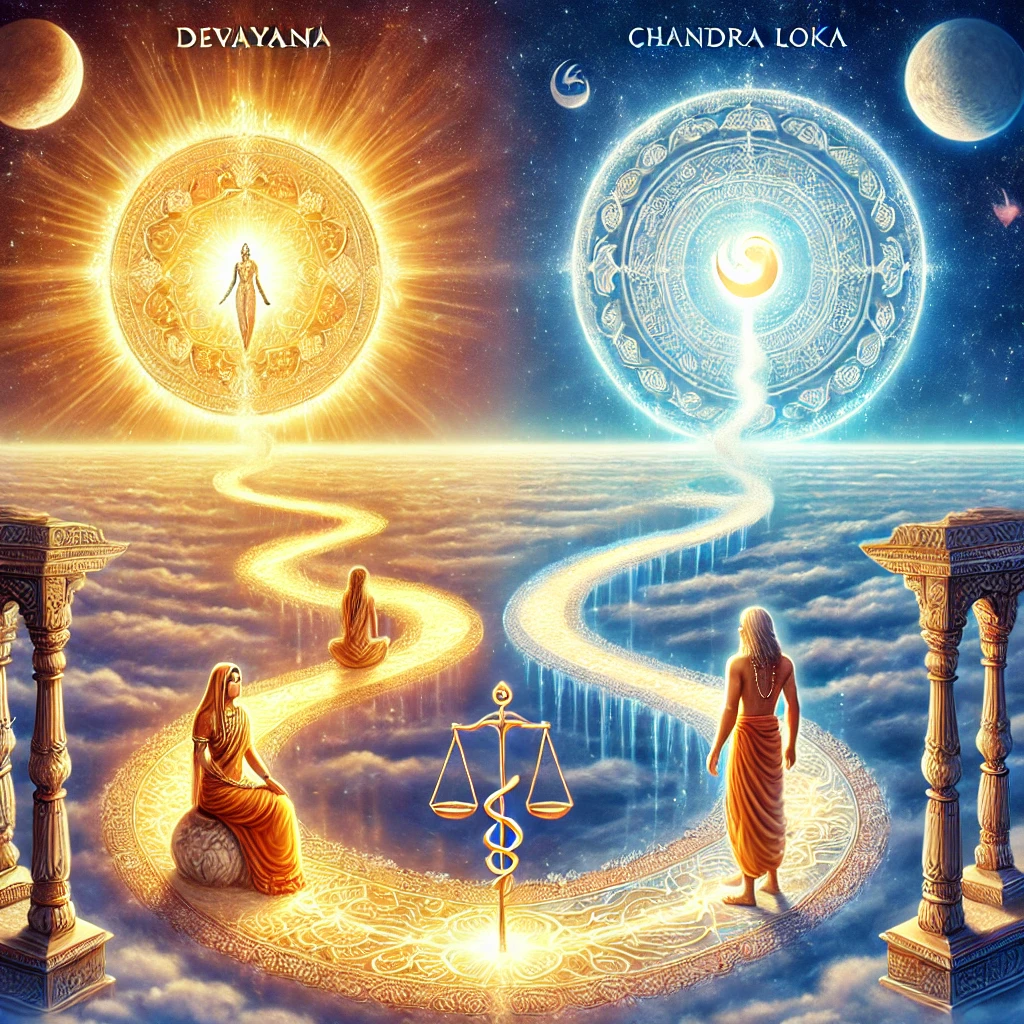
The term “gati” refers to movement or motion, specifically the transition phase of a journey. In the scriptures, there is mention of two primary paths or movements after death:

  1. Devayāna Gati (Path of the Gods)
  2. Pitṛyāna Gati (Path of the Ancestors)

The Pitṛyāna Gati extends only up to the lunar realm (Chandraloka). After experiencing the fruits of past actions in that realm, the soul must return to the cycle of birth and death. This is why it is considered a circular or curved movement (vakragati).

In contrast, Devayāna Gati leads towards the solar sphere (Sūryamaṇḍala). Upon crossing the solar sphere, the soul merges into the eternal Brahman and does not return. This is a straight or direct movement (sarlagati). The scriptures widely acknowledge both types of movements.

The Pitṛyāna Gati is associated with souls destined for rebirth. Those who take this path do not stay permanently in any celestial realm; they are bound to return, whether from heaven or any other loka, to resume their journey through human birth and karma. The cycle of ascent and descent continues for such souls.

In contrast, Devayāna Gati cannot be attained without the integration of knowledge (jñāna) with action (karma). While absolute knowledge (viśuddha jñāna) is not mandatory, the harmonization of knowledge and action is essential for Devayāna Gati.

The Role of Bhakti and Yogic Disciplines

Devayāna Gati has been extensively discussed by bhakti-oriented traditions and spiritual masters. Apart from describing this path, they have also elaborated on the process of soul’s departure at the time of death, known as utkramaṇa.

One of the key spiritual pathways for liberation is Sushumnā Nāḍī, the central energy channel in the human body. Just as the Sushumnā Nāḍī exists within the body, there is a cosmic Sushumnā pathway in the universal structure, extending beyond the human body.

Sushumnā is considered a radiant solar energy channel, or a ray of the Sun. If at the moment of death, the departing soul is able to ascend through this pathway, it reaches Brahmaloka—the highest celestial realm—without returning. This is Devayāna Gati, which leads to complete liberation (mokṣa), without the possibility of rebirth.

The State Beyond Movement—The Ultimate Stillness

There exists a state where there is no movement at all. This state is not for everyone; only those who attain complete spiritual realization remain in an unchanging state of divine union with the Supreme (Paramātman). This is the state of final integration (Yoga-siddhi), achieved by great bhaktas and yogis.

If knowledge is fully developed, movement ceases to exist because the necessity for transition disappears. Movement exists only as a means to progress from lower to higher states. But once the highest state is attained, there is no returning nor moving forward—only permanent beingness in the Absolute.

The Three Fundamental States of Movement

  1. “Gati-Aagati” (Coming and Going) – The soul moves upwards but returns due to unfinished karma. This is the Pitṛyāna path, bound to the cycle of birth and death.
  2. “Gati without return” – The soul ascends but does not come back, reaching a state of permanent residence in the divine realm (Devayāna).
  3. “Neither coming nor going” – The ultimate transcendental state where movement is not required, as the being has already attained oneness with the Supreme.

The Ultimate Realization

The highest teaching of this doctrine is that once the soul comprehends its true nature, it no longer needs to seek any other realm. The Supreme Reality (Brahman) is omnipresent, and the idea of a journey itself dissolves.

For those still in spiritual progression, moving towards higher realms is necessary until final liberation is attained. But for fully realized beings, movement has no significance.

Thus, the mystery of movement and stillness (gati-sthiti) lies in understanding the path of return, the path of no return, and the state beyond all movement.

Gati-Sthiti (Movement and State) Read More »

You cannot copy content of this page