
June 2025

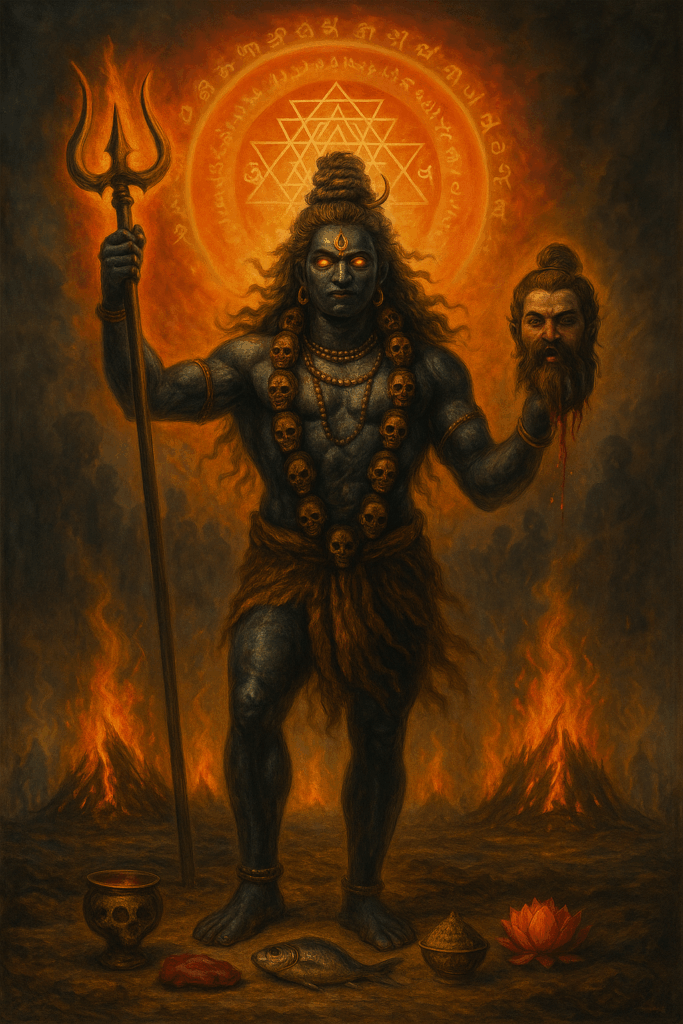
Can Kālabhairava be called an “ideal Vīra” in Tantra?

Can Kālabhairava be called an “ideal Vīra” in Tantra?

Yes—Kālabhairava embodies the qualities of the supreme Vīra Bhāva, but he is actually more than an aspirant Vīra—he is the parama-guru and presiding deity who grants the Vīra attitude to practitioners. In other words, he is not just a practitioner of Vīra Bhāva—he is the archetype and personification of it.


🌿 Why Kālabhairava embodies the Vīra ideal:

✦ 1. Fearlessness and Transgression of Limits

  • Kāla Bhairava literally means Time-Transcending Terrifier.
  • He destroys the arrogance of even Brahmā, which is the ultimate act of transgression—not out of ego but to restore Dharma.
  • This is the essence of Vīra Bhāva: Abandoning fear and convention to manifest the Supreme Truth.

Kularṇava Tantra 2.16 describes a Vīra as:
“He who abandons fear, who is steadfast in knowledge, who destroys the dualities of pure and impure.”

Kālabhairava personifies this.


✦ 2. Mastery of Time and Death

  • Ordinary aspirants in Pāśu Bhāva are afraid of Time (Kāla) and death.
  • Vīra Bhāva is about transcending that fear.
  • Kālabhairava is Time itself, wielding Time as a weapon.
  • This is why the Bhairava Tantras declare him the form of timeless, fearless consciousness.

✦ 3. Destruction of Ego

  • The Vīra’s primary sādhanā is to cut the head of ego.
  • Kālabhairava literally severs Brahmā’s fifth head, the head of spiritual pride.
  • This act is the perfect symbol of Vīra Bhāva:
    • “I will not spare even the most exalted forms of ignorance.”

✦ 4. Acceptance of Consequences

  • After decapitating Brahmā, Kālabhairava accepts the consequence of Brahmahatya and wanders as a mendicant.
  • This is the highest form of Vīra Bhāva—undaunted courage plus complete humility.

🪔 How Tantra Views Kālabhairava

While Kālabhairava is a deity and ultimate reality rather than a practitioner, the Kaula and Bhairava Tantras revere him as the parama Vīra—the Supreme Hero whose very form is Vīra Bhāva embodied.

In the Bhairava traditions:

  • He is not merely an example but the source of all Vīra power.
  • Initiation into Bhairava mantra and sādhanā grants the aspirant a share of that fearless consciousness.

Conclusion

Yes, you can say that Kālabhairava is the ideal Vīra in the sense that:

  • He is the archetype of the fearless attitude.
  • He embodies all the qualities that define the heroic adept: transcendence of fear, destruction of ego, transcendence of time, and unwavering devotion to truth.

✅ However, he is also more than an aspirant Vīra—he is the Supreme Guru and presiding consciousness from which Vīra Bhāva arises in the practitioner.


📚 Reference Texts

  • Kularṇava Tantra (Chapters 2 and 9)
  • Mahanirvana Tantra (Chapters 8–10)
  • Bhairava Tantras (Rudrayāmala, Vīrabhairava Tantras)
  • Shiva Mahāpurāṇa

Can Kālabhairava be called an “ideal Vīra” in Tantra? Read More »
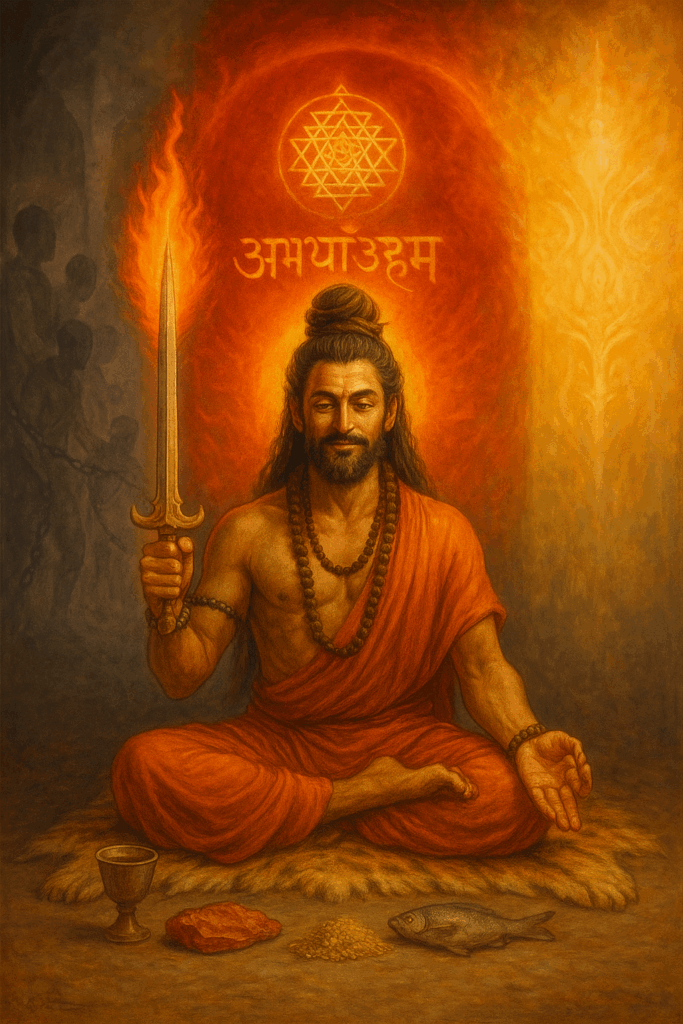
🕉️ Vīra Bhāva in Tantra Śāstra

🕉️ Vīra Bhāva in Tantra Śāstra

1️⃣ Definition and Overview

Vīra Bhāva (वीरभाव) literally means the heroic disposition or the courageous attitude.
It refers to a spiritual temperament distinguished by:

  • Fearlessness (abhaya)
  • Non-attachment to rigid social conventions
  • Capacity to engage transgressive or “forbidden” practices as a means to transcend duality
  • A powerful, self-reliant spiritual enthusiasm

In the Tantric classification, all practitioners are grouped into three bhāvas:

  1. Pāśu Bhāva – the bound and timid attitude
  2. Vīra Bhāva – the heroic and transformative attitude
  3. Divya Bhāva – the divine and naturally liberated attitude

This classification is most systematically taught in the Kularṇava Tantra (esp. Chapters 2, 8, and 9).


2️⃣ Scriptural References

📜 Kularṇava Tantra (Chapter 2, Verse 15)

पाशवो ये भवेन्मर्त्ये, वीराश्च दिव्य एव च।

pāśavo ye bhaven martyāḥ vīrāś ca divya eva ca

“Among mortals, some are Pāśu, some are Vīra, and some are Divya.”

This sets the framework that Vīra Bhāva is a middle, transformative state—the soul no longer bound by fear (Pāśu), yet not fully merged in divine awareness (Divya).


3️⃣ Characteristics of Vīra Bhāva

🔹 1. Fearlessness (Abhaya)

Vīra is undaunted by criticism, social taboo, or danger.
He knows the real enemy is ignorance (avidyā), not social judgment.

Kularṇava Tantra 2.16

“He is called Vīra who, abandoning fear, worships with a mind purified by knowledge.”


🔹 2. Transcendence of Duality

The Vīra understands that purity and impurity are relative concepts within Māyā.
Therefore, Vīra Bhāva permits ritual practices involving “forbidden” substances—such as wine, meat, sexual union—not for indulgence, but as a means to break attachment and recognize non-dual Śiva-consciousness.

Mahanirvana Tantra 8.52

“By rejecting all distinction between pure and impure, the Vīra attains liberation.”


🔹 3. Commitment to Guru and Sādhana

While independent in spirit, the Vīra is deeply devoted to the Guru’s word and the practice of mantra, nyāsa, and meditation.

Kularṇava Tantra 9.35

“He who is steady in the Guru’s command, who does not tremble in any circumstance—that adept is called Vīra.”


🔹 4. Capacity for “Left-Hand” (Vāmācāra) Sādhanā

In Vīra Bhāva, the practitioner is authorized (by initiation) to practice Pañca-Makāra Sādhanā (“the Five Ms”):

  • Madya – wine
  • Māṃsa – meat
  • Matsya – fish
  • Mudrā – grain or gesture
  • Maithuna – ritual union

These are symbolic and often internalized, but when practiced externally, it requires Vīra Bhāva to overcome social fear and cultivate non-dual awareness.

Kaulajñānanirṇaya 11.44

“Without the Vīra Bhāva, the practitioner becomes bound; with Vīra Bhāva, the same acts become liberating.”


🔹 5. Equanimity in All States

Vīra remains unmoved in honor or dishonor, gain or loss, joy or suffering.

Kularṇava Tantra 2.20

“Equanimous in praise and blame, that man is a true Vīra.”


4️⃣ The Symbolism of the Vīra

  • The Vīra is called Kula-Vīra (the hero of the Kaula lineage).
  • He is compared to a lion among sheep—undaunted, free, noble.
  • His defining mark is inner sovereignty (svātantrya).

5️⃣ Cautions About Misunderstanding Vīra Bhāva

Tantra texts warn that without initiation, scriptural guidance, and inner readiness, attempting Vīra practices leads to spiritual ruin and further bondage.

Kularṇava Tantra 9.43

“He who, lacking understanding and initiation, imitates the acts of the Vīra, falls into hell.”

True Vīra Bhāva is an inner state of wisdom and detachment—not mere outer ritual.


6️⃣ Difference from Pāśu and Divya Bhāva

AspectPāśu BhāvaVīra BhāvaDivya Bhāva
TemperamentFearful, bound by conventionCourageous, transcends tabooNaturally pure, effortless
View of PurityAttached to dualities of pure/impureTranscends all dualitiesAbides spontaneously in non-duality
SādhanāOuter ritual, worship of devatāVīra sādhanā, Pañca-Makāra, internal realizationDirect awareness of Self as Śiva
GoalMerit, purificationLiberation through courage and knowledgeSpontaneous liberation

7️⃣ In Summary

Vīra Bhāva is:

  • The heroic inner attitude of the tantric practitioner.
  • Marked by fearlessness, detachment, and transgressive wisdom.
  • A transformative state between bondage (Pāśu) and divinity (Divya).

✅ It requires:

  • Proper initiation (Dīkṣā)
  • Guidance of the Guru
  • Disciplined sādhana
  • Inner purification

Without these, imitating Vīra Bhāva is considered a grave spiritual error.


Key Scriptural References

  • Kularṇava Tantra, Chapters 2, 8, 9
  • Mahanirvana Tantra, Chapters 8–10
  • Kaulajñānanirṇaya of Matsyendranātha

🕉️ Vīra Bhāva in Tantra Śāstra Read More »

Purpose of Sādhana

The Beginning of the Search for the True ‘I’ and the Purpose of Sādhana

Our Divine Being (Bhagavān) is such a Reality that, when He remains concealed, even our closest loved ones may turn against us and, figuratively, put fire into our mouths and offer us oblations to death. In the statement: “I do not know anything, nor do I believe in anything,” — the presence of the ‘I’ is essential. It is from here that the true search for the real ‘I’ begins.

In this inquiry into the self, through deep reflection, the seers (ṛṣis) discovered a permanent and supreme ‘I’, whose true nature is beyond the reach of speech and mind. These same ancient sages declared that this Being is of the nature of Sat–Cit–Ānanda (Existence–Consciousness–Bliss).

The Vedas proclaim that He is both formless (nirguṇa) and with form (saguṇa).

  • To the extent that He reveals Himself through His own power (śakti), and
  • to the extent that we purify and refine our senses and, with Her help, grasp His nature —
    He is saguṇa (with attributes).

Beyond that, His unknown, unrevealed aspect is referred to as nirguṇa. The seers who have realized the Truth have described His manifested aspect using names such as Saguṇa, Sat–Cit–Ānanda, Puruṣottama, and so on.

The Śakti, who is the source of infinite variety, limitless beauty, sweetness, and charm, infinite power, knowledge, and bliss, and the reservoir of all auspicious qualitieswe are Her reflection or portion. That infinite Power lies dormant within us in seed form.

To awaken this Power, to fill ourselves with divine awareness (bhagavad-bhāva), to become empowered by Divine Śakti, and to dedicate ourselves to actions pleasing to the Divinethis is the supreme and ultimate purpose of life.

Purpose of Sādhana Read More »

The Bound Soul (Pāśu): Differing Visions in Śaiva Siddhānta and Tantra

🕉️ 1. The Concept of Pāśu in Śaiva Siddhānta

In Śaiva Siddhānta, which is the most systematized dualistic Śaiva philosophy (especially in Tamil tradition), Pāśu is defined as:

  • the individual soul (jīva)
  • inherently distinct from God (Pati)
  • eternally existent but bound by impurity and bondage (Pāśa)

The Three Eternal Realities (Mūla Tattvas) are:

  1. Pati — the Lord (Śiva)
  2. Pāśu — the soul
  3. Pāśa — the bonds

This is called Pati-Pāśa-Pāśu Tattva-traya.

🕉️ Scriptural Reference
Śiva Jñāna Bodham, Verse 1:
“Patiyum Pāsamum Pāśuvum āgi…”
(“The Lord, the Bonds, and the Souls…”)

Characteristics of the Pāśu in Śaiva Siddhānta:

  • The soul is conscious, but not omniscient or omnipotent.
  • It is bound by:
    1. Āṇava Mala – the impurity of primal ignorance (the root bondage).
    2. Kārma Mala – the impurity due to karma (action and its consequences).
    3. Māyā Mala – the impurity due to illusion (attachment to the phenomenal world).

These three malas limit the soul’s knowledge and freedom.

  • The soul transmigrates (samsara) under their influence.
  • Liberation (mokṣa) is achieved through:
    • Śiva’s grace,
    • True knowledge (pati-jñāna), and
    • Removal of the three malas.

🕉️ Key Point in Śaiva Siddhānta
The soul (Pāśu) is eternally distinct from Śiva, even after liberation, retaining individuality.


🕉️ 2. The Concept of Pāśu in Tantra Śāstra

In Tantra Śāstra, especially in the Kaula and Śākta traditions (Kularṇava Tantra, Rudra-yāmala Tantra, Mahanirvana Tantra), Pāśu also means “the bound soul,” but the approach is more dynamic and transformative:

  • The Pāśu is:
    • Bound by pāśa, the cords of ignorance, fear, duality, and karma.
    • Identified not only by bondage but by psychological temperament (timid, limited, attached to conventions).
  • The goal is to transform the Pāśu into a Vīra (heroic adept) and finally a Divya (divine being).

Kularṇava Tantra (2.9) states:

पाशबद्धाः पशवः सर्वे।
pāśa-baddhāḥ paśavaḥ sarve
(“All souls are bound animals.”)

Tantra’s classification of practitioners:

  1. Pāśu Bhāva – Bound nature (timid, dualistic)
  2. Vīra Bhāva – Heroic nature (courageous, transformative)
  3. Divya Bhāva – Divine nature (illumined)

In Tantra:

  • Dīkṣā (initiation) and Śaktipāta (descent of grace) are the primary means to cut the bonds.
  • The ultimate realization is non-duality with Śiva or Śakti.
  • After liberation, the individual realizes their identity with supreme consciousness.

🕉️ Key Point in Tantra
The distinction between Pati and Pāśu is ultimately transcended in the experience of unity.


3. Key Differences: Śaiva Siddhānta vs. Tantra Śāstra

Below is a comparison table to clarify:

AspectŚaiva SiddhāntaTantra Śāstra
Definition of PāśuThe individual soul, eternally distinct from ŚivaThe bound soul, with potential to realize identity with Śiva
Nature of BondageThree malas (āṇava, kārma, māyā)Three pāśas (āṇava mala, māyīya mala, kārma mala) and mental fetters
Post-liberation StatusThe soul retains individuality but enjoys closeness to ŚivaThe soul merges in non-dual Śiva-consciousness
Path to LiberationKnowledge, grace, ritual disciplineInitiation, śaktipāta, mantra, ritual, transgressive practices (vīra sādhanā)
Attitude to ConventionStrong emphasis on ritual purity and orthopraxyEmphasis on transcending convention (vīra bhāva)

4. Summing Up

Śaiva Siddhānta sees the Pāśu as an eternally individual soul, always distinct but made pure through divine grace.

Tantra Śāstra sees the Pāśu as a temporary state of bondage to be transformed progressively into divinity, culminating in non-dual realization.

In both, recognizing oneself as Pāśu is the first step toward liberation, but the vision of liberation itself differs—either perfect union while retaining individuality, or ultimate non-duality with Śiva.

The Bound Soul (Pāśu): Differing Visions in Śaiva Siddhānta and Tantra Read More »

The Attributes of Pāśu in Tantra Śāstra

🕉️ The Attributes of Pāśu in Tantra Śāstra

1. Introduction

In the spiritual philosophy of Tantra, the term Pāśu (पाशु) does not simply mean an “animal,” but more precisely a being who is bound—a soul enmeshed in the bonds (pāśa) of ignorance, attachment, and limitation. This term is foundational for understanding the Tantric classification of spiritual aspirants and their capacities for liberation.

According to the Kularṇava Tantra (Chapter 2), all embodied beings are initially Pāśu:

पाशबद्धाः पशुः सर्वे

pāśa-baddhāḥ paśuḥ sarve

“All are Pāśu, bound by the fetters.”

The journey of Sādhana is a progressive movement from Pāśu to Vīra (the heroic adept) and ultimately to Divya (the divine being).


2. Etymology and Core Meaning

The Sanskrit root paś (पश्) means “to bind” or “to see.” Pāśu thus connotes:

  • That which is bound by the cords of Māyā and karma.
  • That which perceives itself as limited and separate.

The Mahanirvana Tantra (Chapter 4) clarifies:

स जीवः पशुरित्युक्तः पाशबद्धो हि कर्मभिः

sa jīvaḥ paśur ity uktaḥ pāśa-baddho hi karmabhiḥ

“The embodied soul is called Pāśu, for it is bound by the cords of karma.”


3. The Three Primary Fetters (Pāśa)

According to Kularṇava Tantra (Chapter 2) and Rudra-yāmala Tantra, the Pāśu is bound by three principal fetters:

  1. Āṇava Mala
    The impurity of separateness—“I am small and incomplete.”
  2. Māyīya Mala
    The impurity of delusion—believing the universe to be ultimately real and separate from Śiva.
  3. Kārma Mala
    The impurity of karma—action and its results binding the jīva to saṃsāra.

These three are collectively called Tripāśa—the three cords.


4. Attributes and Behavioral Marks of the Pāśu

The Tantras identify specific psychological and behavioral attributes that define the Pāśu state. Notably:

(A) Fear and Weakness

  • The Pāśu is overpowered by bhaya (fear), particularly of death, loss, and censure.
  • Kularṇava Tantra (2.9): “Timid, bound by convention, he fears all that is new.”

(B) Excessive Ritualism without Understanding

  • He clings to outer ritual and fails to perceive the inner essence.
  • Mahanirvana Tantra (4.30): “He who worships merely with offerings but lacks knowledge is still a Pāśu.”

(C) Attachment to Duality

  • Strong identification with caste, status, family, and material achievement.
  • Rudra-yāmala Tantra (2.45): “Bound by the dualities of honor and dishonor, gain and loss.”

(D) Limited Faith and Courage

  • Doubt dominates his sadhana; he hesitates to accept the Guru’s word.
  • Kularṇava Tantra (13.80): “He whose faith is partial and whose heart is full of doubt remains bound.”

(E) Dependence on External Approval

  • His actions are driven by what others think.
  • Mahanirvana Tantra: “The Pāśu seeks the approval of the world more than the favor of Śiva.”

5. The Path Beyond Pāśutva

Importantly, Tantra never condemns the Pāśu as hopeless. Rather, the tradition provides a graded path of transformation:

  • The Pāśu is ripened through sādhana, primarily by:
    • Receiving Śaktipāta (descent of grace)
    • Initiation (Dīkṣā)
    • Meditation and mantra-japa
    • Cultivation of non-dual awareness

Kularṇava Tantra (2.10) gives the famous verse:

पाशभेदो भवेत् दीक्षा

pāśa-bhedo bhavet dīkṣā

“It is initiation that cuts the bonds.”

This is why in Kaula and Śākta traditions, proper initiation is regarded as the decisive step out of Pāśutva into the heroic (Vīra) state.


6. Threefold Classification of Practitioners

Many Tantras classify practitioners according to temperament:

  1. Pāśu Bhāva
    • Predominant in inertia, fear, attachment
    • Relies on outer forms
  2. Vīra Bhāva
    • Heroic disposition
    • Courageous, willing to transgress convention to realize the truth
  3. Divya Bhāva
    • Divine temperament
    • Naturally free of bondage and duality

This tripartite classification is described in detail in Kularṇava Tantra (Chapter 2).


7. Conclusion: From Bondage to Freedom

The recognition of Pāśu attributes is not intended to demean the aspirant, but to diagnose the condition of the bound jīva so that proper sadhana can be applied.

As the Mahanirvana Tantra declares (4.33):

“He who knows himself bound becomes eager to be free.”

The entire purpose of Tantra is to transform the Pāśu into a liberated soul—to cut the cords and awaken the innate Śiva-consciousness.


8. Select References

  1. Kularṇava Tantra (esp. Chapters 1–2, 13)
  2. Rudra-yāmala Tantra (Pāśu and Vīra classification)
  3. Mahanirvana Tantra (Chapters 4–5)
  4. Tantraloka of Abhinavagupta (for Kashmir Shaiva perspectives)

✨ Closing Reflection

The journey from Pāśu to Divya is the very heart of the Tantric way—transforming fear into courage, ignorance into insight, and bondage into freedom. As the Kularṇava Tantra says:

जन्मकोटिशतैरपि प्राप्तुं शक्यं न मोक्षदम्।

janma-koṭi-śatair api prāptuṁ śakyaṁ na mokṣadam

“Not even in hundreds of millions of births can liberation be obtained without initiation.”

Therefore, it is the grace of the Guru and the fire of sadhana that alone transform the bound Pāśu into the victorious Vīra and the radiant Divya.

The Attributes of Pāśu in Tantra Śāstra Read More »

The Synthesis of Yoga by Sri Aurobindo – Full Structure & Chapter Listing

📚 The Synthesis of Yoga – Full Structure & Chapter Listing

This work is divided into:

  1. An Introduction section,
  2. Four main Parts (each a major Book or Section),
  3. An Appendix to Part I,
  4. A partial continuation of Part IV.

Each Part contains several chapters. Here is the structure:


🔹 Introduction – “The Conditions of the Synthesis”

Ch. No.Chapter Title
ILife and Yoga
IIThe Three Steps of Nature
IIIThe Threefold Life
IVThe Systems of Yoga
VThe Synthesis of the Systems

🔹 Part I – The Yoga of Divine Works

Ch. No.Chapter Title
IThe Four Aids
IISelf-Consecration
IIISelf-Surrender in Works — The Way of the Gita
IVThe Sacrifice, the Triune Path and the Lord of the Sacrifice
VThe Ascent of the Sacrifice – 1: The Works of Knowledge — The Psychic Being
VIThe Ascent of the Sacrifice – 2: The Works of Love — The Works of Life
VIIStandards of Conduct and Spiritual Freedom
VIIIThe Supreme Will
IXEquality and the Annihilation of Ego
XThe Three Modes of Nature
XIThe Master of the Work
XIIThe Divine Work
XIIIAppendix to Part I: The Supermind and the Yoga of Works

🔹 Part II – The Yoga of Integral Knowledge

Ch. No.Chapter Title
IThe Object of Knowledge
IIThe Status of Knowledge
IIIThe Purified Understanding
IVConcentration
VRenunciation
VIThe Synthesis of the Disciplines of Knowledge
VIIThe Release from Subjection to the Body
VIIIThe Release from the Heart and the Mind
IXThe Release from the Ego
XThe Realisation of the Cosmic Self
XIThe Modes of the Self
XIIThe Realisation of Sachchidananda
XIIIThe Difficulties of the Mental Being
XIVThe Passive and the Active Brahman
XVThe Cosmic Consciousness
XVIOneness
XVIIThe Soul and Nature
XVIIIThe Soul and Its Liberation
XIXThe Planes of Our Existence
XXThe Lower Triple Purusha
XXIThe Ladder of Self-Transcendence
XXIIVijnana or Gnosis
XXIIIThe Conditions of Attainment to the Gnosis
XXIVGnosis and Ananda
XXVThe Higher and the Lower Knowledge
XXVISamadhi
XXVIIHathayoga
XXVIIIRajayoga

🔹 Part III – The Yoga of Divine Love

Ch. No.Chapter Title
ILove and the Triple Path
IIThe Motives of Devotion
IIIThe Godward Emotions
IVThe Way of Devotion
VThe Divine Personality
VIThe Delight of the Divine
VIIThe Ananda Brahman
VIIIThe Mystery of Love

🔹 Part IV – The Yoga of Self-Perfection

Ch. No.Chapter Title
IThe Principle of the Integral Yoga
IIThe Integral Perfection
IIIThe Psychology of Self-Perfection
IVThe Perfection of the Mental Being
VThe Instruments of the Spirit
VIPurification — The Lower Mentality
VIIPurification — Intelligence and Will
VIIIThe Liberation of the Spirit
IXThe Liberation of the Nature
XThe Elements of Perfection
XIThe Perfection of Equality
XIIThe Way of Equality
XIIIThe Action of Equality
XIVThe Power of the Instruments
XVSoul-Force and the Fourfold Personality
XVIThe Divine Shakti
XVIIThe Action of the Divine Shakti
XVIIIFaith and Shakti
XIXThe Nature of the Supermind
XXThe Intuitive Mind
XXIThe Gradations of the Supermind
XXIIThe Supramental Thought and Knowledge
XXIIIThe Supramental Instruments — Thought-Process
XXIVThe Supramental Sense
XXVTowards the Supramental Time Vision

🔹 Appendix to Part IV:

Ch. No.Chapter Title
XXVIThe Supramental Time Consciousness

🔹 Notes:

  • The chapter numbering restarts within each part.
  • Some chapters are clearly progressive (e.g., “The Ascent of the Sacrifice – 1” and “– 2”).
  • Many chapters build upon earlier traditional yogic systems but expand them through the lens of Integral Yoga.
  • The final chapters on the Supermind signal Sri Aurobindo’s original contribution to evolutionary spirituality.

The Synthesis of Yoga by Sri Aurobindo – Full Structure & Chapter Listing Read More »

The Synthesis of Yoga by Sri Aurobindo – The Yoga of Divine Works Chapter Two Summary – “Self-Consecration”

🌟 Part I – The Yoga of Divine Works

Chapter Two Summary – “Self-Consecration” (Simplified)

This chapter is a natural continuation of the previous one. After speaking of the four aids to Yoga, Sri Aurobindo now describes the first step the seeker must take to truly begin the path: a sincere and total “self-consecration.”


🙏 What Is Self-Consecration?

  • To consecrate means to dedicate wholly and sacredly.
  • Self-consecration is the act of offering one’s entire being—body, life, mind, will, emotions—to the Divine.
  • It is not just a ritual or temporary feeling, but a complete inward movement of surrender and devotion.

“All must be given—nothing should be kept back.”


🧬 What Does One Consecrate?

Sri Aurobindo says the seeker must offer:

  • Their thoughts and beliefs,
  • Their desires and emotions,
  • Their actions and work,
  • Even their inner struggles and imperfections.

The Divine does not require perfection first—but sincerity. Even confusion or resistance can be offered with humility.

“Offer all that you are, all that you have, all that you do—not only the good parts.”


🔄 Consecration Must Be Continuous

  • It is not a one-time vow, but a daily, hourly practice.
  • Even in small actions—speaking, thinking, eating, working—we can learn to act as if we are doing it for the Divine, and not the ego.

“Consecration is not in words, but in the very movement of life.”


🔥 Why Is This Step So Important?

  • It is the foundation of Integral Yoga.
  • Without this conscious offering, the Divine cannot enter and transform the being.
  • When we consecrate ourselves, the Divine Shakti (Power) can begin her secret work.

“True consecration brings the Divine Presence into the smallest things.”


⚖️ Surrender Is Not Weakness

  • Some people think surrender means passivity or defeat. But here, it is the courage to trust the highest, even when the ego resists.
  • You are not surrendering to a dogma or doctrine—you are surrendering to your own highest Self, the Divine within and above.

🛤 What Happens As One Consecrates?

Gradually:

  • The ego loosens its hold.
  • Life becomes more peaceful and meaningful.
  • One becomes an instrument of the Divine Will.
  • The path becomes clearer, even if not always easier.

“The consecration of the soul is the call to the Divine to take up his own work.”


💡 Key Message:

“Consecration is the soul’s first offering to the Divine Flame.”
It is not perfection that the Divine demands first, but the willingness to give oneself fully—light and shadow alike. This opens the door to grace and transformation.

The Synthesis of Yoga by Sri Aurobindo – The Yoga of Divine Works Chapter Two Summary – “Self-Consecration” Read More »

The Synthesis of Yoga by Sri Aurobindo – Part I – The Yoga of Divine Works Chapter One Summary – “The Four Aids” simplified summary

🌟 Part I – The Yoga of Divine Works

Chapter One Summary – “The Four Aids” (Simplified)

Sri Aurobindo now begins the practical explanation of his Integral Yoga. In this first chapter of Part I, he introduces the four essential helps that support the seeker on their spiritual path.


🧭 What Are the Four Aids?

Sri Aurobindo explains that the journey of Yoga is not taken alone. The seeker is supported by four powerful aids:


1️⃣ Shastra – Spiritual Knowledge and Teachings

  • “Shastra” means scripture or body of wisdom.
  • These are teachings and writings that guide the seeker—like the Gita, the Upanishads, or the writings of realized sages.
  • They help us understand the goal, the methods, and the dangers of the path.
  • But they are not mechanical rules. The seeker must apply them wisely and intuitively.

📘 “The Shastra is a help, not a cage.”


2️⃣ Utsāha – Personal Effort and Aspiration

  • “Utsāha” means enthusiasm, energy, and effort.
  • The seeker must take responsibility: be sincere, disciplined, and willing to grow.
  • Without effort, knowledge remains theory.
  • But this effort must not be ego-driven—it should be offered to the Divine.

⚠️ Self-effort alone is not enough, but it is essential as a starting point.


3️⃣ Guru – The Divine Guide or Teacher

  • The Guru is the one who awakens the Divine Consciousness in the seeker.
  • The true Guru is not just a person, but a channel of the Divine, often acting from within as the “Inner Teacher.”
  • The external Guru is helpful, but ultimately the Divine is the real Master.

👣 “He who chooses the Divine has already been chosen by the Divine.”


4️⃣ Kāl – Time and the Divine Working

  • “Kāl” means Time.
  • The process of transformation takes time. Rushing or forcing results is not the way of the Divine.
  • The Divine works silently and surely. Trust in the divine timing is key.
  • One must be patient, persistent, and open.

⏳ “Nothing in the path is wasted; all effort ripens when the time is ripe.”


🧩 How Do These Four Work Together?

  • The Shastra shows the road.
  • Utsāha gives the will to walk it.
  • The Guru protects and awakens the traveler.
  • Time and the Divine Force carry the traveler to the destination.

All four must unite for the Yoga to move steadily forward.


💡 Key Message:

“The path of Yoga is guided by knowledge, effort, guidance, and divine timing.”
We do not walk alone. With the right aspiration, help from the Guru, trust in Time, and wisdom from the Shastra, the journey becomes possible for all.

The Synthesis of Yoga by Sri Aurobindo – Part I – The Yoga of Divine Works Chapter One Summary – “The Four Aids” simplified summary Read More »

The Synthesis of Yoga by Sri Aurobindo – Chapter Five Summary – “The Synthesis of the Systems” simplified summary

🌱 Chapter Five Summary – “The Synthesis of the Systems” (Simplified)

After describing the traditional Yogas (Karma, Jnana, Bhakti), Sri Aurobindo now explains how to unite them into a complete or Integral Yoga that embraces all parts of life and human nature.


⚙️ Why a Synthesis Is Needed

  • Each Yoga path touches a vital part of the being:
    • Karma → Will and action
    • Jnana → Mind and knowledge
    • Bhakti → Heart and emotion
  • But used alone, each is partial.
  • The full transformation of human nature needs all powers—heart, mind, will, body—united under the Divine.

“Yoga must not only liberate the soul but transform the whole life into its divine possibility.”


🧠💓✋ What Happens When the Yogas Combine?

When the three are practiced together:

  • Knowledge (Jnana) gives understanding of the Divine.
  • Love (Bhakti) gives emotional union and surrender.
  • Works (Karma) give practical realization through daily life.

Together, they:

  • Uplift every part of the being.
  • Remove ego at all levels.
  • Make the Divine not just a truth beyond life, but a living Presence within life.

🔁 Their True Meeting Point: The Divine Itself

  • The real synthesis isn’t a mental “combination.”
  • It happens naturally when all parts of the being turn toward the one central truth—the Divine.
  • The Divine becomes the:
    • Goal of knowledge,
    • Beloved of the heart,
    • Master of the work.

“Not three separate paths, but three faces of one movement toward the Divine.”


🧘‍♂️🌍 This Synthesis Has a Purpose: Transforming Earth-Life

  • Traditional Yogas aim at liberation from life.
  • Sri Aurobindo’s Integral Yoga aims at transformation of life.
  • That’s why it needs to:
    • Embrace the body (physical Yoga),
    • Enter cosmic consciousness (universal Yoga),
    • Receive the Supramental (divine truth-consciousness).

🧭 A New Kind of Yoga for a New Age

  • We are in a time of spiritual evolution.
  • Just as matter gave rise to life, and life to mind, so now mind must give way to spirit.
  • This requires a Yoga not of escape, but of perfection—of human nature shaped into divine nature.

“This is not a Yoga for the few, but for the future.”


💡 Key Message:

“Yoga is the passage from the human to the divine.”
By synthesizing the great Yogas—action, knowledge, devotion—we begin a new step in evolution: not liberation from the world, but manifestation of the Divine in the world.

The Synthesis of Yoga by Sri Aurobindo – Chapter Five Summary – “The Synthesis of the Systems” simplified summary Read More »

The Synthesis of Yoga by Sri Aurobindo – Chapter Four Summary – “The Systems of Yoga” simplified summary

🌱 Chapter Four Summary – “The Systems of Yoga” (Simplified)

In this chapter, Sri Aurobindo explains the traditional paths of Yoga—how they each focus on a specific part of our being—and why a greater synthesis is needed for full spiritual transformation.


🧘‍♂️ The Main Traditional Yogas

1️⃣ Karma Yoga – The Path of Action

  • This path focuses on selfless work, dedicating all actions to the Divine.
  • The aim is to surrender the ego, become an instrument of the Divine Will.
  • It purifies the will and dynamic nature.

“Do the work, but offer all to the Divine—not for personal gain or desire.”

2️⃣ Jnana Yoga – The Path of Knowledge

  • This path is for those who seek the highest truth through inner reflection and discrimination.
  • The seeker tries to go beyond the mind to discover the One Self or Brahman, the silent, formless Reality.
  • It purifies the intellect and brings inner detachment.

“You are not the body, not the mind—you are the pure Self.”

3️⃣ Bhakti Yoga – The Path of Devotion

  • This is the path of the heart, of intense love and surrender to the Divine.
  • The seeker relates to the Divine as a lover, child, servant, or friend.
  • It purifies the emotions and awakens divine joy.

“Give your heart entirely to the Divine—let love lead the way.”


🧩 Each Yoga Works on One Part of Us

  • Karma Yoga works on the will.
  • Jnana Yoga works on the mind.
  • Bhakti Yoga works on the heart.

But each leaves out other parts, or doesn’t transform them fully.


❗ Limits of Separate Systems

  • These separate paths can lead to liberation or some form of inner realization.
  • However, they may neglect other vital parts of our being:
    • For example, Jnana may ignore emotions or body.
    • Bhakti may leave behind the thinking mind.
  • Therefore, they do not lead to complete transformation of life.

⚠️ Traditional Yoga often aims at escape from life, not transformation of life.


🔄 Why a New Synthesis Is Needed

Sri Aurobindo says:

  • We must go beyond these limited systems.
  • The true goal is to transform the whole being—body, mind, heart, will—into the Divine image.
  • This needs an integral approach, combining all powers of our nature in a harmonious way.

💡 Key Message:

“No part of our being should be left untouched by the Yoga.”
We need a Yoga that doesn’t leave out life, body, or world. It must take all of us—action, thought, emotion—and offer everything to the Divine for transformation.

The Synthesis of Yoga by Sri Aurobindo – Chapter Four Summary – “The Systems of Yoga” simplified summary Read More »

You cannot copy content of this page